

Digital Leverage
On vibecoding, Billie Eilish, and food's DIY software opportunity

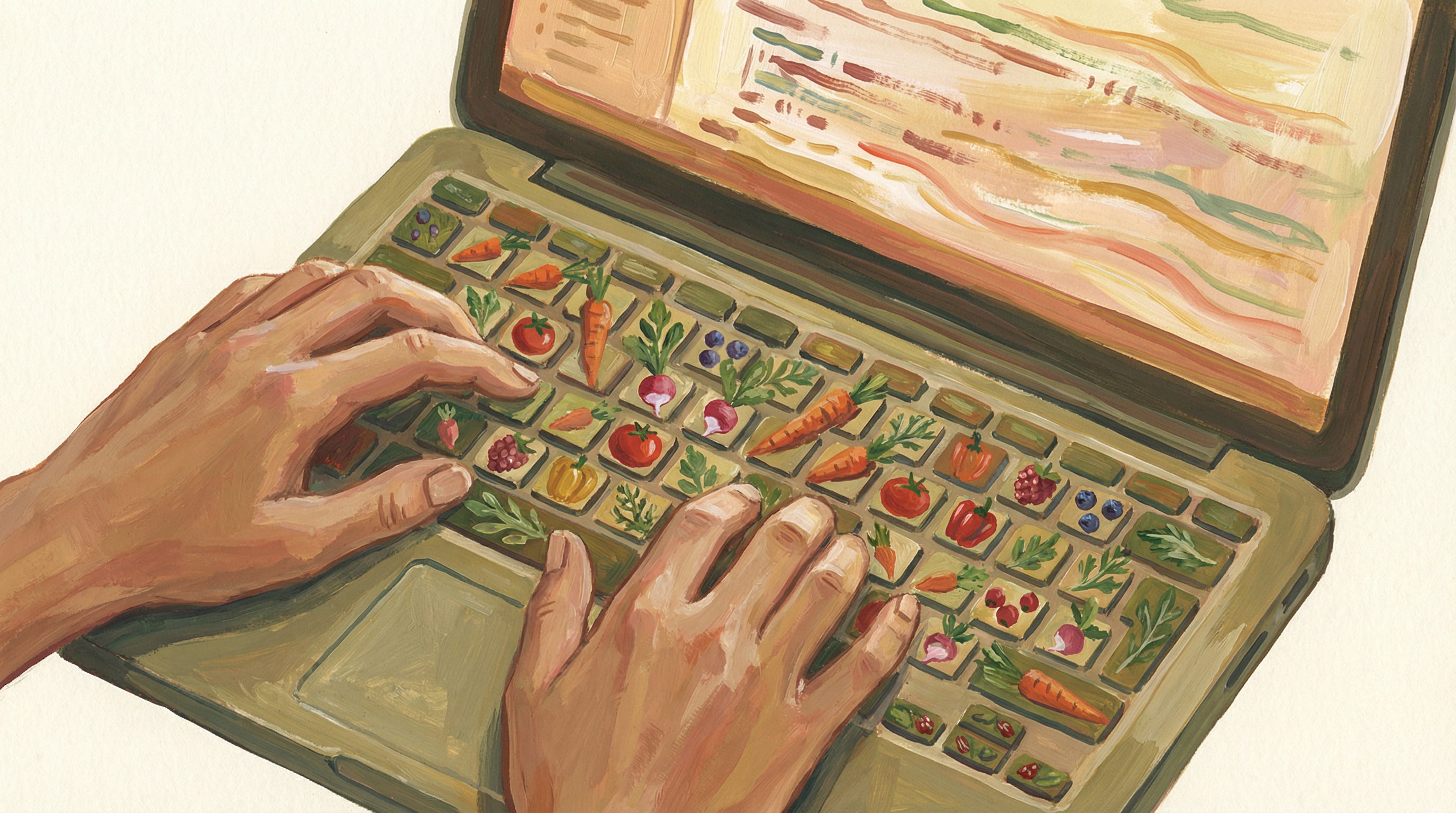
Vibecoding has mostly been a tech story so far. Engineers and founders are using AI coding tools to move faster, prototype in hours instead of weeks, skip early hires they would have needed two years ago. That matters. But those people already knew how to build software, or at least how to manage the process of building it. AI made them more productive.
The more consequential shift is what happens when people who never built software before suddenly can. For decades, the only people who could turn an idea into a working application were engineers or people who could afford to hire them.
Everyone else had to wait for a software company to notice their problem, decide the market was big enough, and build something close enough to be useful. Vibecoding changes who gets to build, and that changes what gets built. The person with the problem becomes the person who builds the solution. And because she understands the problem better than any outside developer ever could, what she makes fits in ways off-the-shelf software never did.
Software Has Eaten the World
Software is the medium through which almost all economic value now moves. Google, Apple, Microsoft, Amazon, Meta. Uber didn’t own cars. Airbnb didn’t own hotels. Instagram was thirteen employees when Facebook bought it for a billion dollars. The leverage software provides is hard to overstate, and until recently, access to that leverage required either engineering skills or the money to hire them.
You can’t run a business today without touching software dozens of times a day, whether you think of yourself as a “tech person” or not. Payments, scheduling, inventory, customer communication, accounting, compliance. All of it flows through software somebody else built, configured for somebody else’s needs. And for most people, that was just how it worked. You picked the best option available, learned to live with its limitations, and moved on. No reasonable person was going to learn to code just because their inventory tracker annoyed them. So the friction stayed invisible. You adapted to the tool instead of the tool adapting to you, and you never thought to question it because there was no other option.
Vibecoding breaks that open. The on-ramp is simple: open an AI tool and type something like “Build me an app that tracks my inventory by supplier and flags when I’m within two weeks of running out.” Or just start with: “I have this problem. Here’s how I currently deal with it. Build me something better.” The AI will ask clarifying questions, walk you through decisions, and produce something functional. You’ll go back and forth for a bit, tweaking things that aren’t quite right, the same way you would with a contractor. But within hours you have working software shaped to your actual needs. It builds the tool and teaches you how to use it.
Once you start, the speed is striking. I’ve built entire interactive websites in ten minutes from my phone. Not wireframes. Working sites. I built myself a personal finance app because I didn’t like any of the options on the market. I’ve made interactive games for my friends and me to play on the weekend. I built custom research software that handles the way I actually think about organizing sources, something no off-the-shelf tool got right. When building software takes months and costs tens of thousands of dollars, you only build things you’re sure about. When it takes minutes and costs nearly nothing, you start building things you’re curious about.
Most people’s relationship with AI has been conversational: chatting, brainstorming, help with writing or proofreading. That’s useful, but vibecoding turned a corner for me because the output is a thing you can use. Something functional exists at the end that didn’t exist before. That shift changed how I think about what’s possible on a Tuesday afternoon with no budget and no engineering team.
Once that clicks, you start seeing problems differently. The workaround you’ve accepted for years at work. The spreadsheet you maintain by hand every Friday. These are everywhere, and they’re almost never problems a software company would bother solving. The market is too small. The audience is you, maybe your team, maybe a few dozen people who do exactly what you do. But now you can describe what you want and have it built in an afternoon. Custom software for a customer of one.
Think of it like bread. If you can’t bake, you eat whatever the store sells and you make do. And that’s fine for many people. But if you learn to bake, you control the flour, the hydration, the ferment time. You make bread the way you want it, not the way some manufacturer decided you should want it. Vibecoding does the same thing with software, except baking well takes years of practice and a feel for dough. Vibecoding takes a description in plain English and ten minutes of spare time.
Why Food People Should Care
In software-centric industries, the people who understand a problem and the people who can build software to solve it sit near each other. In tech and finance, they’re often in the same building. In food, they almost never are.
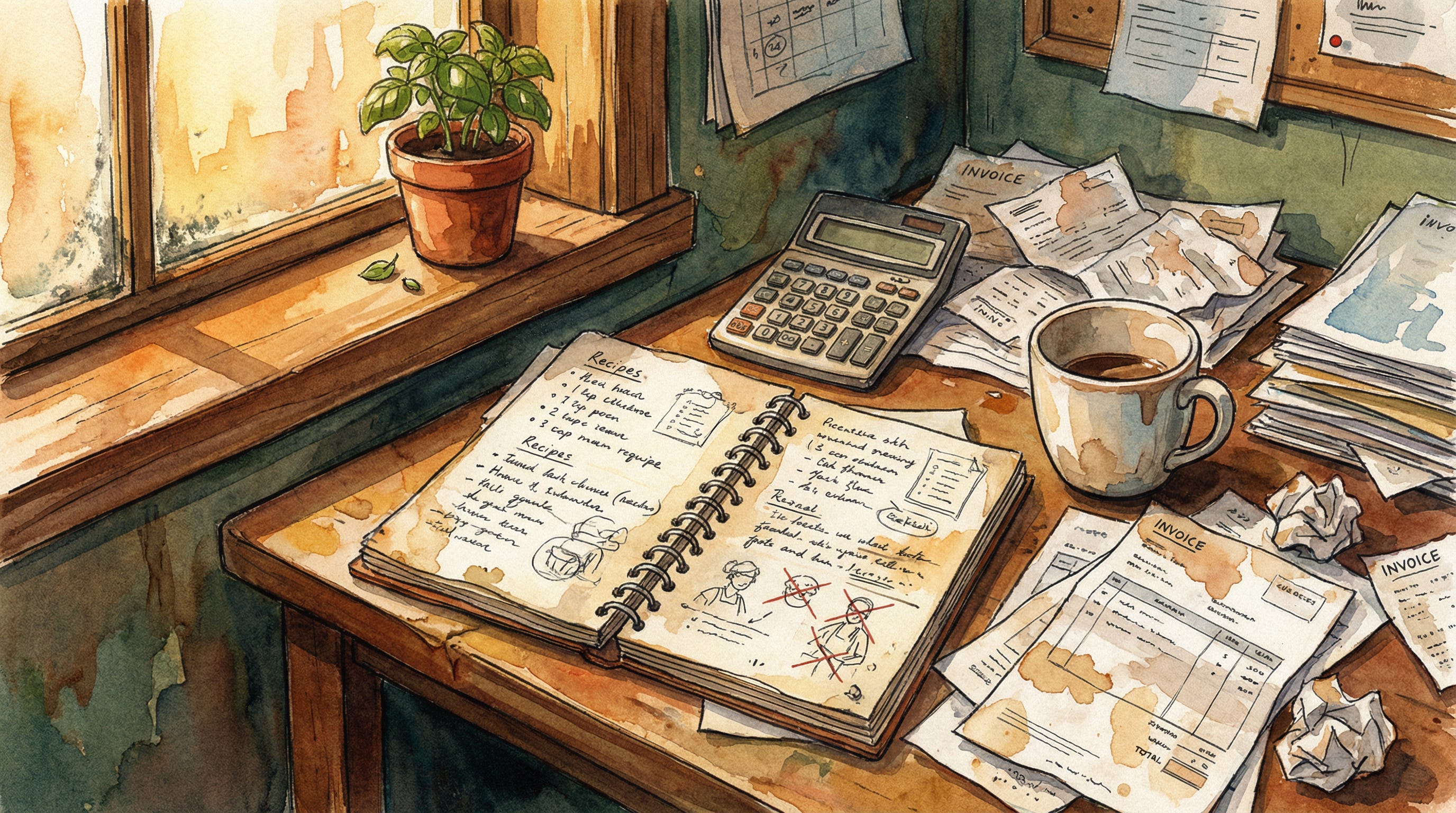
So food people hack it. I know chefs and recipe developers who track their formulations in Excel. Think about that for a second. Software designed for financial modeling, repurposed as a recipe database, because nothing better exists that fits how they actually work at a price they can afford.
A food truck operator tracking sales, commissary schedules, and event permits across three different apps and a notebook. A farmer tracking cover crop rotations across 800 acres has her spreadsheet dialed. A CPG founder managing retail distribution through four channels has a Google Sheet doing exactly what she needs. They could each describe the right tool in four sentences. Until now, that description had nowhere to go.
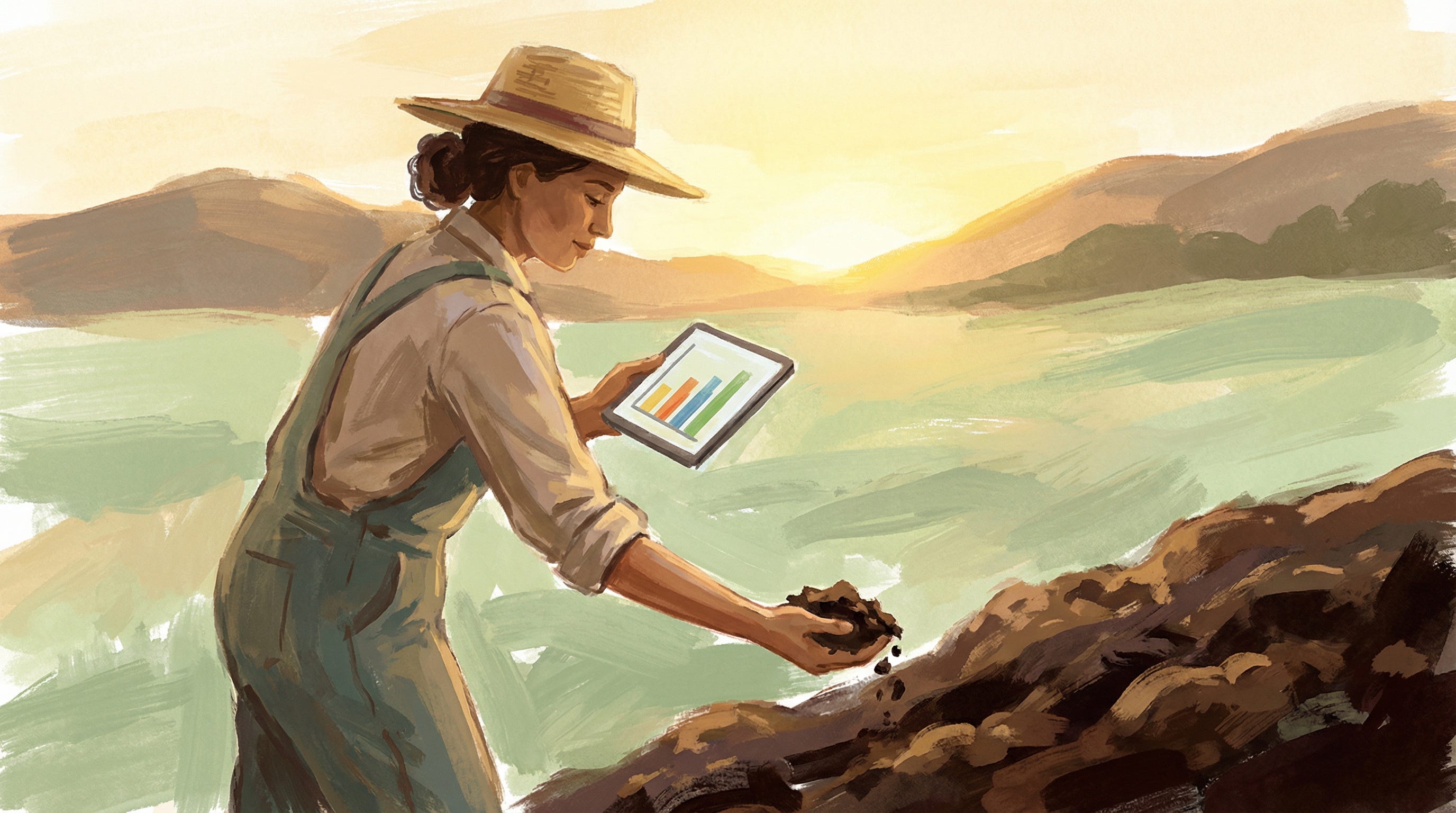
Nobody knows a farm like the farmer who runs it. Not the agronomist who visits twice a year. Not the software company in Austin that built a “farm management platform” after interviewing twelve growers at a trade show. She knows which field drains poorly in April, which supplier holds up when first-choice seed stock runs out, how the morning actually runs versus how the manual says it should.
Vibecoding closes that gap. She describes the tool she actually wants and has it built in hours. Real software, with a database, user accounts, search. Customized to how she and her team work. She doesn’t stop being a farmer. She becomes a farmer whose operational knowledge is no longer stuck behind an engineering barrier.
What Bedroom Musicians Taught Us
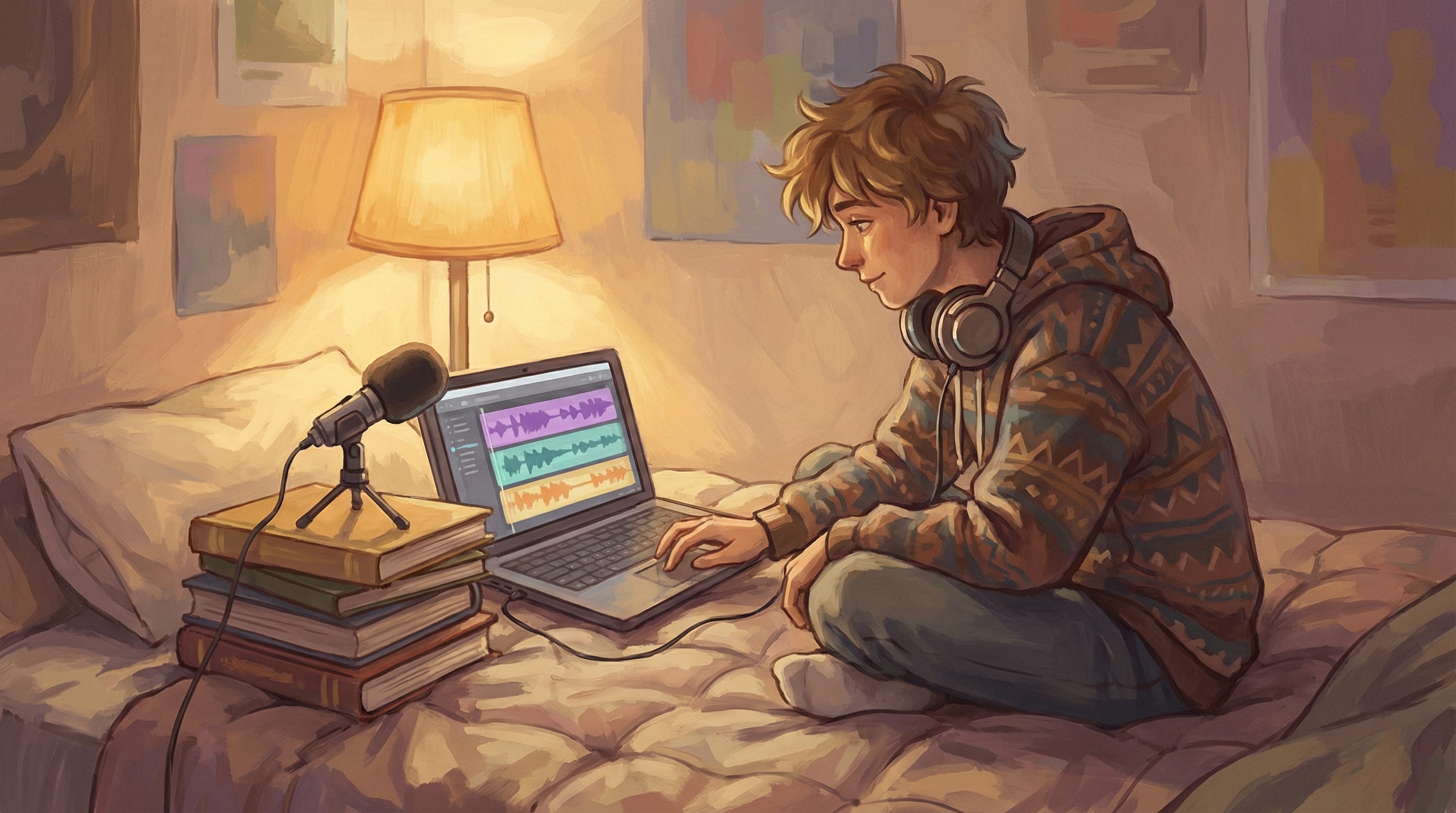
In the late 2000s, the cost of music production collapsed. Ableton Live, a USB microphone, and a laptop was enough for anyone to produce a track. SoundCloud was enough to distribute it. Before that, making music required studio time, audio engineering knowledge, and usually a label’s money. The technical barrier filtered for access. Talent had nothing to do with it. Podcasting followed the same arc. A USB mic and a Riverside account replaced what used to require a radio license and a broadcast studio. Most podcasts have twelve listeners. But Joe Rogan, Serial, and Call Her Daddy all started as low-budget experiments by people the traditional media system would never have platformed.
Cheap tools flooded the internet with terrible music. Millions of tracks that went nowhere. The same thing is happening now with AI: low-effort slop clogging every platform, and critics pointing to it as evidence that democratizing the tools cheapens the craft. I don’t dispute that AI is producing a lot of junk. But focusing only on the junk misses what’s actually shifting. Democratized tools don’t promise everyone will make something great. They promise that people who would have made something great, but couldn’t get access, now can. The old system had no way of finding those people. Cheap tools find them by letting everyone try.
And if you don’t trust the major AI companies, you don’t have to use them. Open-source models exist. You can vibecode your own AI setup using open-source tools, no technical expertise required, just plain language describing what you want your stack to look like. You get to choose which companies you support and which ones you don’t.
Most of what gets made will be forgettable, and that’s fine. Every so often, one of those bedroom producers turns out to be Billie Eilish, a teenager recording “Ocean Eyes” in her Highland Park bedroom with her brother. Or Chance the Rapper, a kid from Chicago’s South Side who released Coloring Book without a label and won three Grammys. Or Lil Nas X, who made “Old Town Road” on a laptop with a $30 beat bought online, then spent 19 weeks at number one. All bedroom musicians. None came through the traditional system. They came through because the tools got simple enough to get out of the way.
That’s what’s starting to happen in food. A farmer with a direct-sales idea, a nutritionist who wants to track outcomes differently, a co-op manager who needs inventory software that actually fits how co-ops work. These people have always known what they needed. They just couldn’t build it. Now they can.
The Flood Is Coming
If we look past the failure rate and see vibecoding for what it actually is, digital leverage for nontechnical people, something interesting starts to happen. Maybe a farmer stops depending on her software vendor and builds the tool herself. A restaurant rebels against every industry-standard POS system and vibecodes one that actually fits how their floor runs. A CPG founder vibecodes a growth management tool that handles e-commerce, retail analytics, and online marketing in one place, instead of duct-taping four platforms together. People are building things like this right now.
A lot of slop has been created with AI already. That’s true, and it’s obvious to anyone paying attention. But if your take stops there, if you look at the flood of low-effort output and conclude the tools themselves are the problem, I’d ask what you’re planning to build instead. The tools are free. The barrier is gone. If you care about quality, if you have taste and domain knowledge and strong opinions about how things should work, you are exactly the person who should be building with these tools. Ceding the entire space to people who don’t care what they make is a choice. The answer to bad AI output is better AI output, made by people who actually give a damn. You now have the ability to prove that the tools aren’t the problem.
The value was never in the average output. It was in the distribution of attempts. When only a few thousand people can try, you get products shaped by whoever happened to have engineering resources. When millions can try, you get products shaped by the people who actually understand the problems. A few will be so precisely fitted to a real need that they take off on their own, because someone finally built the thing everyone in the industry had been waiting for.
Vibecoding doesn’t build you the Uber corporation overnight. That took billions in capital and years of regulatory battles. But vibecoding could have let someone with no technical background build the first Uber prototype. The version that works for a thousand users in one city, proves demand, attracts investment, and brings in engineers who can rebuild it to scale. The next billion-dollar company might start as a vibecoded prototype that a nontechnical founder shares with a few hundred people who immediately can’t live without it. That’s the spark. Everything else comes after. But without the spark, none of it starts.
Somewhere right now, someone who can’t write a line of code is describing a product idea in misspelled, rambling, half-coherent plain English. The tool is turning that description into a working app. That person is going to share it with a few friends. Most of the time, nothing will happen.
One of these times, something will.
—
Mike Lee is a food futurist and innovation strategist, author of Mise: On the Future of Food, host of The Tomorrow Today Show podcast, creator of Mise Futures, and is on Instagram at The Book of Mise.