

On Glyphosate
The most used herbicide in history might be killing us. Banning it might be worse.

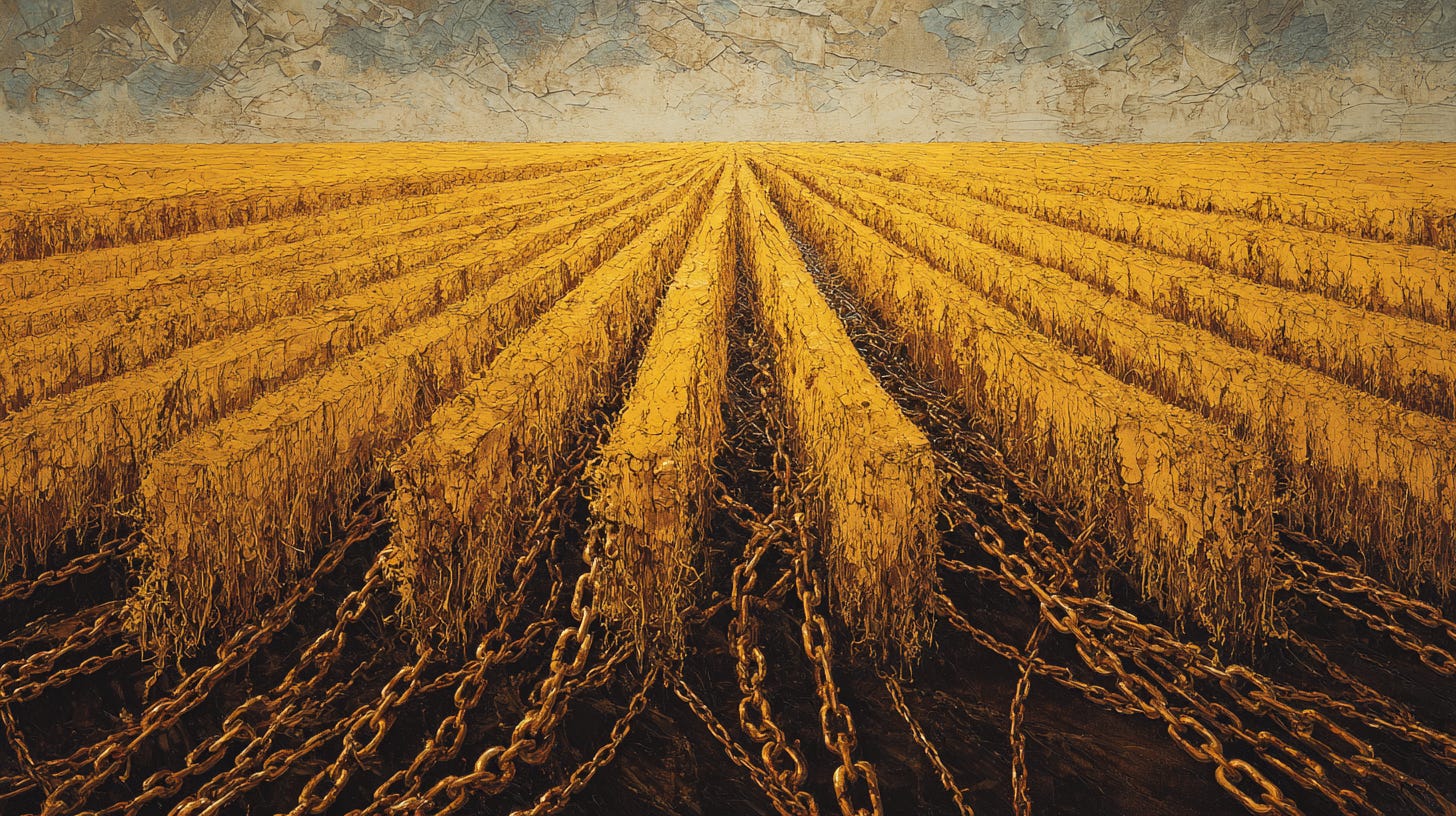
On a Monday morning in late March, a soybean farmer in central Illinois hooks a 600-gallon sprayer to his tractor and rolls out to burn down winter weeds before planting. The tank is full of Roundup. He has sprayed Roundup on this field every spring for twenty-two years. His father sprayed it before him. The weeds die, the soil stays intact, and he plants into clean ground without turning a plow.
He has read the lawsuits. He knows Bayer is paying billions. He also knows that switching to organic would mean three years of lower yields at conventional prices, equipment he doesn’t own, and a crop insurance structure that penalizes the transition. So he fills the tank and drives.
This farmer is not one person. He is tens of thousands of people making the same calculation on the same morning across the Corn Belt, each one weighing what they’ve heard against what they can afford to do about it. The lawsuits say one thing. The economics say another. And the economics win every spring.
In February 2026, Bayer proposed a $7.25 billion settlement to resolve tens of thousands of cancer lawsuits over Roundup. The company acquired Monsanto in 2018 for $63 billion and has been bleeding ever since: $10.9 billion reserved in 2020, stock down over 70 percent, roughly 61,000 lawsuits still open.
The same week, President Trump signed an executive order invoking the Defense Production Act to guarantee continuous domestic production of glyphosate. Over 80 percent of American corn, soy, and cotton acreage runs on it, and the order classified a weedkiller as essential to national food security. That tells you something about how deep the dependency runs.
What a Ban Would Actually Mean
In 2018, a groundskeeper named Dewayne Johnson, who had sprayed Roundup on school grounds while developing lesions across 80 percent of his body, became the first plaintiff to take Bayer to trial. A jury awarded him $289 million. Since then, tens of thousands of similar claims have followed, and calls to pull glyphosate from the market have grown louder with each verdict.
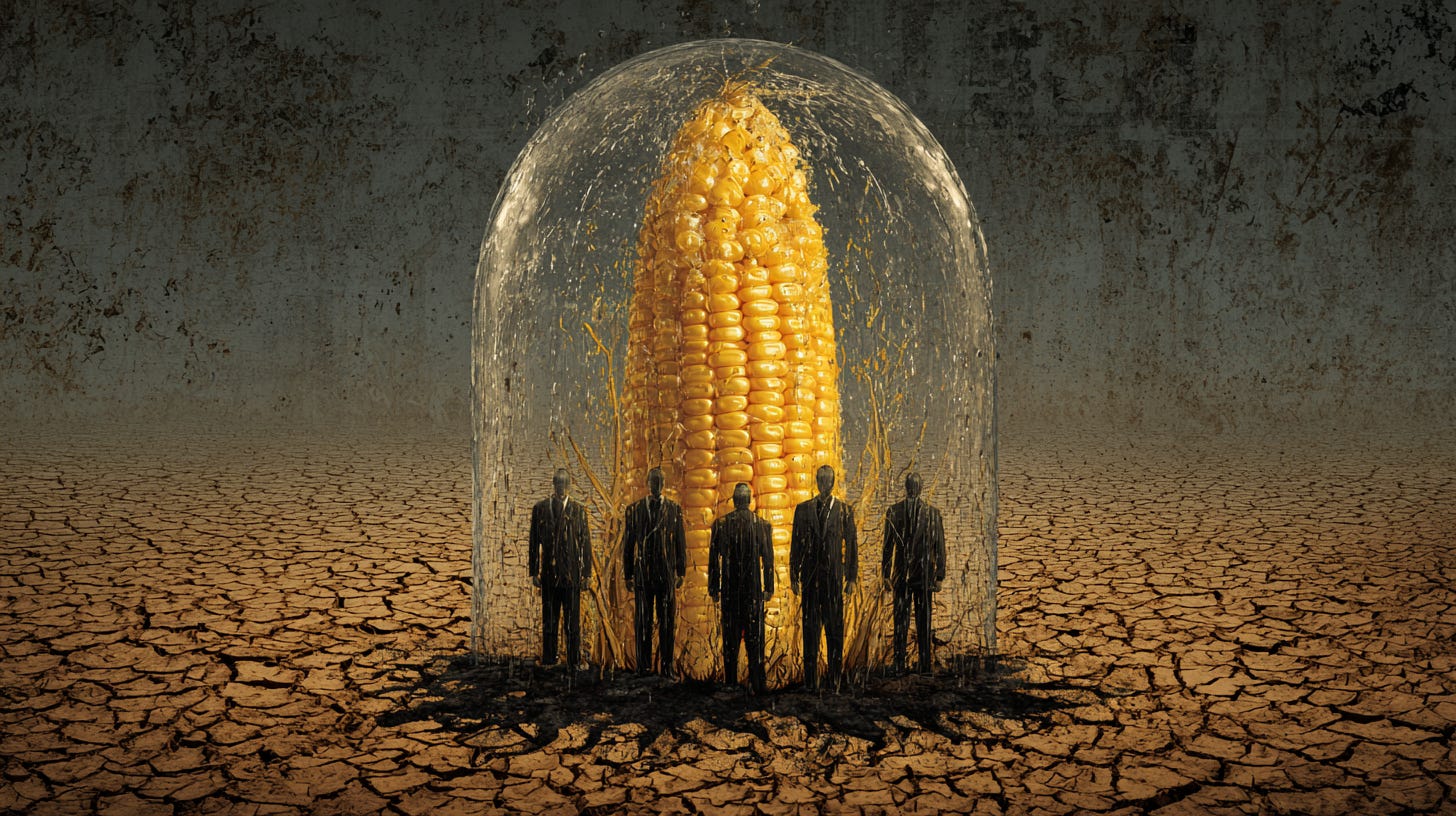
Those calls deserve to be taken seriously. But a ban imposed tomorrow, without transition infrastructure, would not mean less spraying. It would mean different spraying. American agriculture does not have a chemical-free mode at commodity scale, and the chemicals that would fill the void carry more cumulative hazard than glyphosate does.
Paraquat, the closest functional substitute for pre-plant burndown, is banned in over 70 countries. Its acute toxicity is well documented, but the relevant concern for farmworkers is chronic: years of occupational exposure, inhaling spray mist and absorbing it through the skin, have been repeatedly linked to Parkinson’s. Dicamba, the herbicide industry’s current answer to resistant weeds, vaporizes and drifts for miles, destroying crops on neighboring farms that never sprayed it. Atrazine persists in groundwater and has been detected in thousands of drinking water systems. Take glyphosate off the table without building the off-ramp, and farmers reach for these instead, applied more often, in combinations nobody has studied for long-term effects.
Farmers already use these chemicals alongside glyphosate, in smaller quantities, to handle weeds that glyphosate misses. A 2017 analysis in Nature Communications by weed scientist Andrew Kniss found that glyphosate, despite making up nearly half of all soybean herbicide applications, contributes less than one percent of the long-term health risk to mammals from the herbicides used in those fields. Glyphosate does the heavy lifting at low toxicity, keeping the doses of everything else small. Remove it, and farmers don’t stop spraying. They spray more of the chemicals already doing the most damage.
What the Science Says
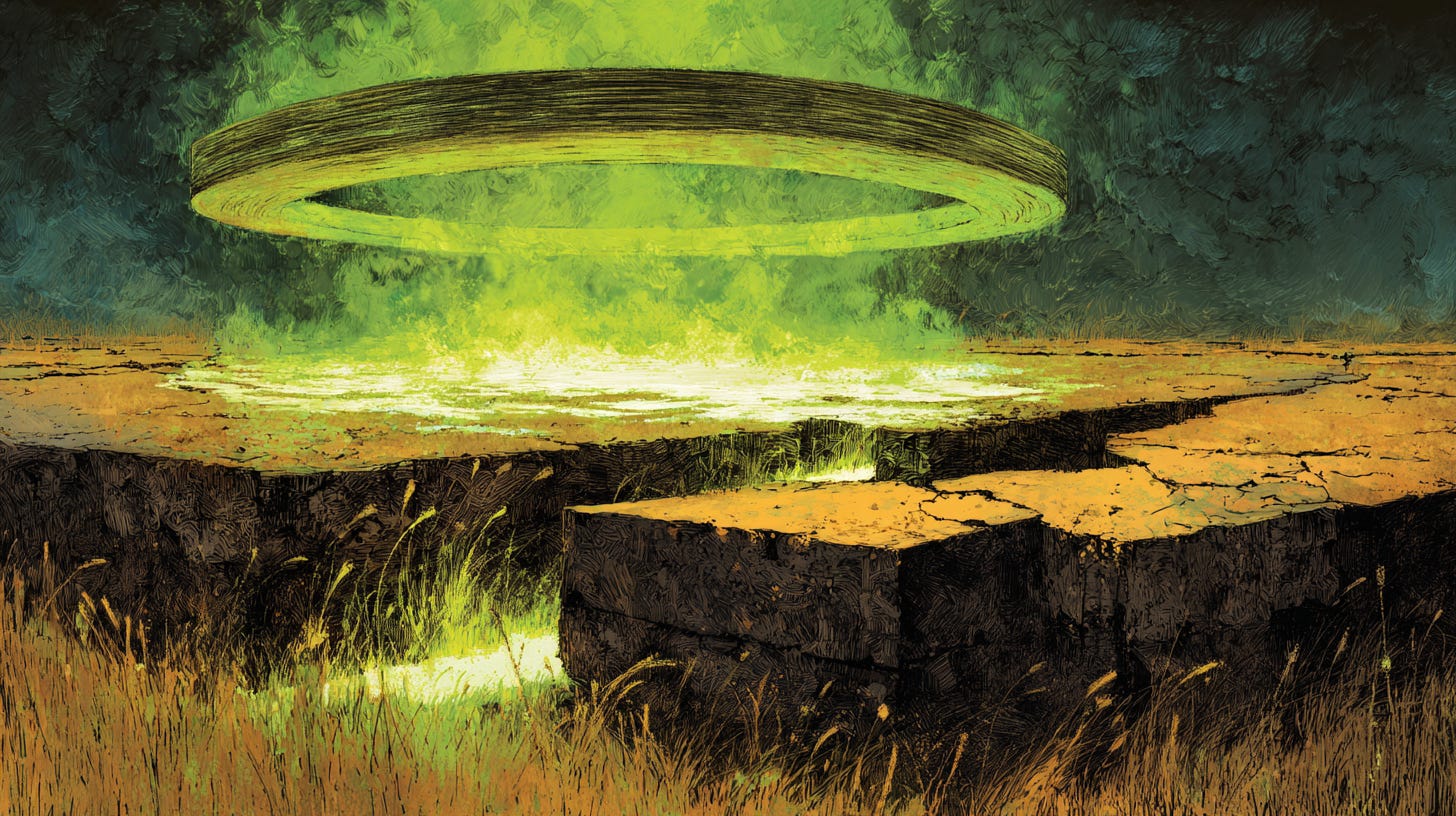
On cancer, major institutions have lined up on opposite sides, and both camps have serious evidence behind them. The WHO classified glyphosate as a “probable human carcinogen” in 2015. A 2025 Ramazzini Institute study found elevated tumor rates across multiple organs in rats exposed to doses regulators classify as safe. On the other side, the EPA, EFSA, and Health Canada have all concluded glyphosate is unlikely to cause cancer at realistic exposure levels, and the Agricultural Health Study, tracking 50,000 pesticide applicators over two decades, found no significant link to non-Hodgkin lymphoma. Independent replication of the Ramazzini findings would go a long way toward resolving this. None has been initiated.
A complicating factor: most regulatory safety reviews tested glyphosate in isolation. Farmers spray Roundup, which contains glyphosate plus surfactants called polyethoxylated tallow amines (POEA), compounds derived from animal fat that help the herbicide penetrate plant leaves. Research from Mount Sinai has found these commercial formulations significantly more toxic to human cells than glyphosate alone, and a 2025 pregnancy cohort detected POEA in 97 percent of participants. The agencies that cleared glyphosate were testing something different from what people are actually exposed to.
Cancer is not the only concern. Glyphosate works by inhibiting an enzyme found in plants, but that same enzyme exists in soil microorganisms. Multiple studies have found that repeated Roundup applications reduce colonization by mycorrhizal fungi, the organisms that help plant roots absorb water and nutrients. Field research has detected glyphosate residues in crop plants a full growing season after treatment. Twenty-two years of annual spraying on the same field does something to the biology underfoot, even if the weeds keep dying on schedule.
All of this plays out against a backdrop of compromised regulatory credibility. The Monsanto Papers revealed the company ghostwrote safety studies that regulators relied on. The Williams et al. 2000 study was retracted in 2025 after evidence of corporate authorship. Whatever conclusion you draw about glyphosate’s safety profile, the regulatory process that certified it was compromised at the source.
Beyond Chemistry
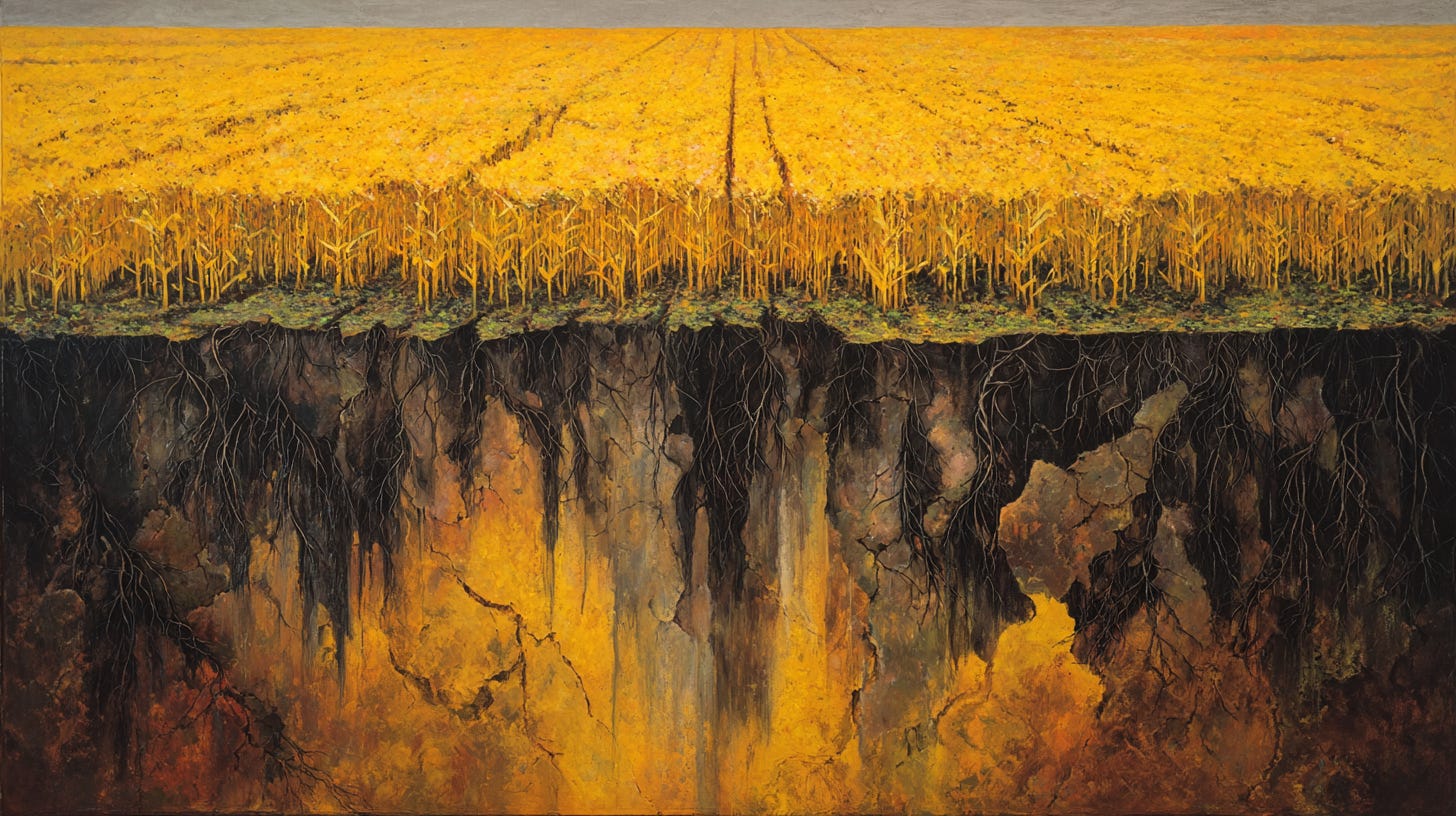
That substitution problem only applies if a ban means an overnight swap to other chemicals. It does not have to. Alternatives that avoid both herbicides and tillage are further along than most of this debate acknowledges, and their progress makes the policy inaction harder to justify.
Rodale’s Farming Systems Trial, now in its fifth decade, shows organic corn and soybean systems matching conventional yields after a transition period and outperforming in drought years. Roller-crimped cover crops suppress weeds without chemicals or tillage: plant cereal rye in fall, flatten it in spring, and the mat holds long enough for the cash crop to shade out competitors.
Carbon Robotics is deploying laser weeding machines that identify and kill individual weeds without touching the crop or the soil. The the GROW research network is testing integrated systems that combine these approaches; farms in the trials are cutting herbicide use by half to three-quarters while holding yield.
The distinction between these methods and conventional organic farming matters, especially for soil. Older organic systems rely on tillage to control weeds, and tillage destroys the same mycorrhizal networks that glyphosate suppresses, while also increasing erosion and releasing carbon from the soil.
The newer approaches, cover-crop-based systems, precision weeding, integrated management, control weeds without turning the soil and without spraying it. They protect the biology above and below ground at the same time. No single method replaces glyphosate on its own, but farms stacking several of them are getting close.
The bottleneck is the transition itself. USDA organic certification requires 36 months without synthetic inputs. During those three years, a farmer pays organic-level costs and sells at conventional prices. Crop insurance coverage drops 35 percent. The USDA has put $300 million into transition support, which sounds like a lot until you set it against 200 million acres of chemical-dependent cropland.
Organic acreage is growing faster than any other agricultural segment, proof that the economics work once a farm clears the transition years. But the Farm Bill, the crop insurance rules, and the research funding all still assume the farmer is spraying. Nothing in the system rewards changing course at the speed the situation demands.
The Trap
Wherever you come down on glyphosate’s safety, the dependency itself is not in question. American agriculture is organized around this one chemical so thoroughly that removing it without preparation would cause more immediate damage than continuing to use it: higher pesticide loads, more tillage, degraded soil, lower yields during the transition years. The off-ramp exists. The tools work. But the investment required to make the transition survivable has never come close to matching the scale of the problem.
Meanwhile, the problem compounds. Resistant weeds are spreading, which forces farmers to spray higher doses or layer additional herbicides on top, which accelerates resistance further, which pushes up costs, which makes the transition harder to afford.
Twenty-two continuous years of Roundup on the same field is already affecting the soil biology that the next generation of farming methods will depend on. And the regulatory credibility that was supposed to settle the safety question has been damaged by Monsanto’s own conduct: the ghostwritten studies and the documented interference with the regulatory process.
That farmer in Illinois, and the tens of thousands like him, will fill the tank again tomorrow morning. Their sons and daughters will probably fill it after them. Each spring the system grinds forward without serious transition investment, the soil gets a little more depleted, the weeds get a little more resistant, and the cost of eventually changing course gets larger.
The longer we wait, the more expensive the reckoning becomes. And right now, every institution with the power to act is betting that the reckoning is someone else’s problem.
—
Mike Lee is a food futurist and innovation strategist, author of Mise: On the Future of Food, host of The Tomorrow Today Show podcast, creator of Mise Futures, and is on Instagram at The Book of Mise.
Another powerful distillation of the facts surrounding this complex problem. Thank you for the continued energy invested to educate all of us, Mike. Time for change.
Beautifully written and researched.
How can we begin to change this if we start with a liability shield for Bayer? Why, do you think, there is such a proposal? Has Bayer threatened to stop supply? Someone drew a line in the sand and it has to be Bayer. Wish some explicit reporting would be done on this particular aspect.
I think we all understand the enormity of the turnaround and the painful impact to human lives in the process of continuing but also changing. We can't ignore that we collectively see the harm now and to our parents and our children - the negative impact is as big as the challenge to turnaround how we farm.
Thank you for flagging the disparity in economic resources being allocated to the solutions vs the size of chemical farming currently - ugh.