

Humans First
A week that broke something open

I had a Dry January piece queued up for today. After this week, it feels trite. Here it is if you want to read it. Instead, I need to write about what’s actually on my mind.
Venezuela. U.S. special forces bombing Caracas, capturing Maduro, the president announcing America would “run” the country. Over a hundred died in the preceding operations. Oil stocks surged.
Iran. Millions in the streets across all 31 provinces. Security forces responded with live ammunition. The government blacked out the internet. Hospitals ran out of blood. One eyewitness told The Guardian he saw “hundreds of bodies” in Tehran.
Minneapolis.
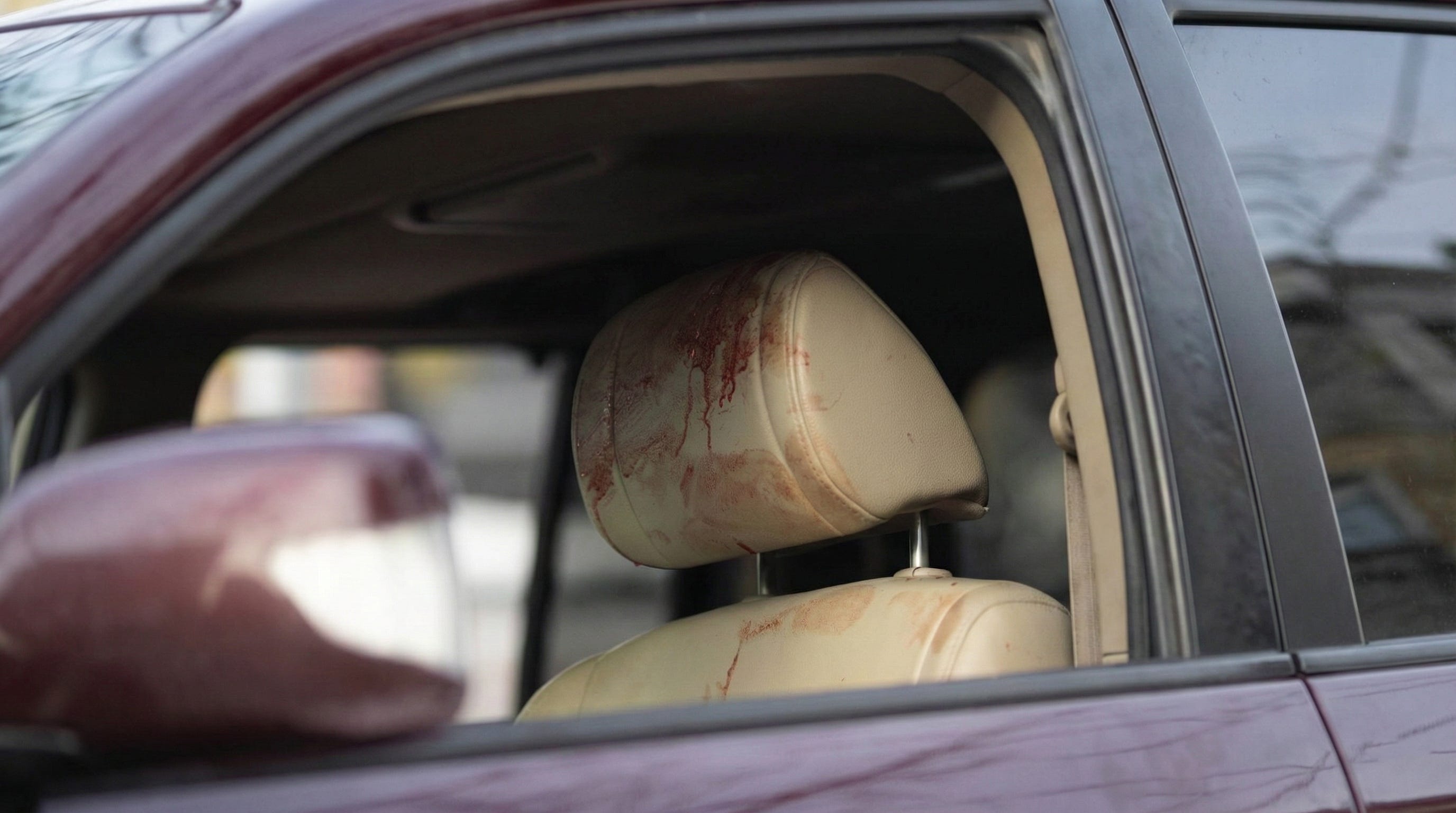
On Wednesday, Renee Nicole Good and her wife stopped to support their neighbors during an ICE operation. Good, a 37-year-old mother of three, was shot in the face by an agent while sitting in her SUV. Within hours, the Homeland Security Secretary called it “domestic terrorism.” The president posted that Good had “violently, willfully, and viciously ran over the ICE Officer.” The vice president called her death “a tragedy of her own making,” called her “brainwashed,” and said the agent who killed her “deserves a debt of gratitude.”
And yesterday, the EPA announced it will no longer estimate the lives saved by reducing air pollution when writing clean-air regulations. Human life, removed from the equation. The variable was simply deleted.
A mother is killed and the government calls her a terrorist. Thousands die in Iran and the regime blacks out the internet. An agency charged with protecting health decides lives don’t count. The pattern is hard to miss: human life as something that shouldn’t constrain what power does.
Something shifted in my body reading all this. Not just sadness or outrage—something more primitive. The part of my brain thinking about work went quiet. A different system came online. My screen looked the same but the words on it had become a foreign language. A debate about sodium recommendations. A hot take on ultra-processed food definitions. The sentences were in English but they weren’t reaching me.
One day you’re a citizen with opinions, writing essays about food and drinking culture. Then something shoves you back toward the base and suddenly you’re a mammal assessing whether the environment is safe. Your brain stops running the software for “career” and starts running the firmware for “survival.”
And yet the food industry kept humming along as if none of it happened. That disconnect is what I can’t stop thinking about—what it means when an industry dedicated to feeding people operates as though people don’t exist beyond their purchasing power.
Business As Usual
My LinkedIn feed crystallized it. The new Dietary Guidelines dropped last week, and people did what people do—parsing the language, debating sodium recommendations, identifying the gaps. Smart people doing their jobs. But reading these posts the same week a mother was killed by a federal agent, the same week protesters were being gunned down in Tehran, felt like watching someone polish silverware while the house burned.
I don’t blame them. The machine keeps running. The content calendar doesn’t pause for political violence. The deadlines remain, regardless of the body count. The professional world assumes the background conditions are stable enough for professional concerns to matter. When that assumption breaks, you either keep pretending or you stop functioning.
Most people keep pretending. It’s not cowardice—it’s that the alternative doesn’t help anyone either. So you compartmentalize. You write your post about beef tallow. You move on. You tell yourself this is resilience.
Maybe it is. Or maybe it’s how the unacceptable becomes normal, one ignored atrocity at a time.
Food Touches Everything
The dissociation runs deeper than one bad week. It’s baked into how the industry thinks about itself—as if food exists in its own domain, separate from politics, power, and violence.
It doesn’t. The people who grow our food, process it, cook it, serve it—many of them are immigrants. Many of them are the people ICE targets. Renee Nicole Good was not an immigrant. She was an American citizen. And ICE shot her anyway. When a mother gets killed after stopping to help her neighbors and the government labels her a terrorist, the fear ripples outward. It ripples through the food system, because the food system runs on the labor of people who now have more reason to be afraid. This is not a metaphor.
When the EPA decides human life doesn’t factor into pollution rules, it affects who can grow food safely, who can work the fields without getting sick, and which communities bear the burden of our industrial food system. Immigration policy is food policy. Labor policy is food policy. Environmental policy is food policy.
And yet the food conversation operates as if none of these connections exist. As if supply chains don’t have people in them. As if “consumer insights” float in some pristine realm untouched by the world.
The Problem with “Consumers”
Food is a human necessity that we’ve turned into a commercial enterprise. Everyone has to eat. Unlike almost any other industry, there’s no opting out. And that creates a tension we rarely acknowledge—between food people need and food people want, between nourishment and commerce, between feeding humans and extracting value from consumers.
The language tells the story. We don’t talk about people. We talk about consumers, shoppers, end users. We segment them into occasions and dayparts, track their path to purchase, and compete for share of stomach. We talk about “activating” shoppers as if they’re dormant devices. We congratulate ourselves for being “consumer-centric” as if reducing humans to data points is the same as understanding them.
When you call someone a consumer, you’ve already decided what matters about them: their utility to your business. Their fears, their struggles, their context—none of it fits in a spreadsheet, so none of it gets counted.
The industry is loudest when selling to the comfortable. The $14 adaptogenic lattes. The high-protein bars in matte, minimalist wrappers. Food as lifestyle, as aesthetic, as armor. That segment operates for people who feel safe—safe enough to have mental bandwidth for whether their snacks align with their values.
You cannot “delight” someone who is terrified. Wellness is a peace-time pursuit. We saw it during the pandemic—when everyone was scared, sales of legacy junk foods surged while premium better-for-you brands flatlined. People didn’t reach for adaptogenic lattes. They reached for Oreos.
Millions never had that safety to begin with. Immigrants who’ve feared ICE for years. Black and brown communities who have feared lethal consequences from authorities long before ICE existed. Families where food insecurity isn’t a white paper topic but a weekly reality. How can someone think about soil health when they don’t have personal safety?
Culture Without a Price Tag
I want to be precise here. I’m not saying food should be reduced to mere sustenance—calories in, survival out.
Food culture matters. The recipes passed down through generations. The rituals that make a family a family. The way communities express identity through what they eat and how they share it. This is part of the human story.
But the industry treats food culture as a premium segment—the artisanal, the craft, the curated experience you pay extra for. As if culture only exists at a certain price point.
Culture exists wherever people eat. Rice and beans made the same way for generations is culture. A family’s Sunday dinner is culture. The traditions of people who will never set foot in a Whole Foods are culture.
The problem isn’t commerce itself. It’s that commerce can only see culture when it’s monetizable. So we valorize the $14 latte while ignoring the food traditions of people who can’t afford it. We’ve conflated culture with premium.
This isn’t an argument against creativity or craft or even trends. It’s an argument against an industry that can’t see past the cash register.
Most of What We Talk About Doesn’t Matter
This is the gut check. Not about the core work—feeding people matters, understanding how people eat matters, building systems that nourish communities matters.
But all the other stuff? The obsessive macro counting. The endless debates about package design. The trend spotting and hot takes. The breathless protein fixation, as if one more high-protein bar will solve anything.
The same week Renee Nicole Good was killed, news broke that Good Culture—the premium cottage cheese brand—was acquired for over $500 million. A mother shot in the face by a federal agent. A half-billion-dollar bet on cultured dairy. I don’t have a tidy way to connect those two facts. I just know they happened in the same week, and one of them is supposed to be my industry, and I couldn’t make myself care about the cottage cheese.
What will our legacy be? Did we push a few more units of some newfangled nutrition bar? Did we chase whatever macro was trending that quarter? Or did we leave the world more nourishing, more equitable, more just?
The people we serve are not consumers or demographics or occasions. They’re humans trying to survive and protect their families. People who get scared and tired and hungry. People who deserve dignity regardless of purchasing power.
What I’m Committing To
I’ll get back to the work. The work continues because it has to. But I’m not going to pretend this week didn’t happen.
I know it can be hard to talk about this stuff at work. Politics, justice, humanity—these aren’t comfortable topics. Some companies discourage it. Some people just want to keep their heads down. I get it.
And I understand that some people might not want to work with me because I’m saying these things out loud. That’s fine. I don’t want to work with those people either.
For years, interviewers have asked me: “What’s the next big thing?” I’m done answering that. It’s the wrong question. It assumes the food industry is a fashion show, that our job is to call trends and position ourselves to profit. The next big thing is the same as the last big thing: feeding people well, with dignity, in a way that doesn’t destroy the planet or exploit the vulnerable. That’s it. That’s the work. Everything else is decoration.
I’m going to go deeper on the issues that actually affect whether people get fed and whether the world gets better. I’m going to push for systems thinking over trend-chasing, for lateral creativity over line extensions, for solving real problems instead of capturing shelf space for the next fad. I want to help broaden how this industry thinks—to see the connections, to ask better questions, to be more effective at work that actually matters. To break people out of their echo chambers. And I’m going to keep saying the uncomfortable things out loud, because the comfortable things aren’t working.
This industry is not a fashion show. It’s not a content calendar. It’s not a series of acquisitions and exits. It is a system that determines whether people eat, what they eat, and whether the people who feed them are treated with dignity or terror. That’s the firmware. That’s what’s running underneath all the software we’ve built on top. And when the world breaks open like it did this week, the software crashes and the firmware is all that’s left.
We are not here to optimize. We are here to feed people. We are humans first. If we forget that, nothing else we do matters.
—
My Consultancy - Mise Futures
My Book - Mise: On the Future of Food
My Podcast - The Tomorrow Today Show
My Instagram - The Book of Mise
bravo. Thank you.
Thank you for this moving message.